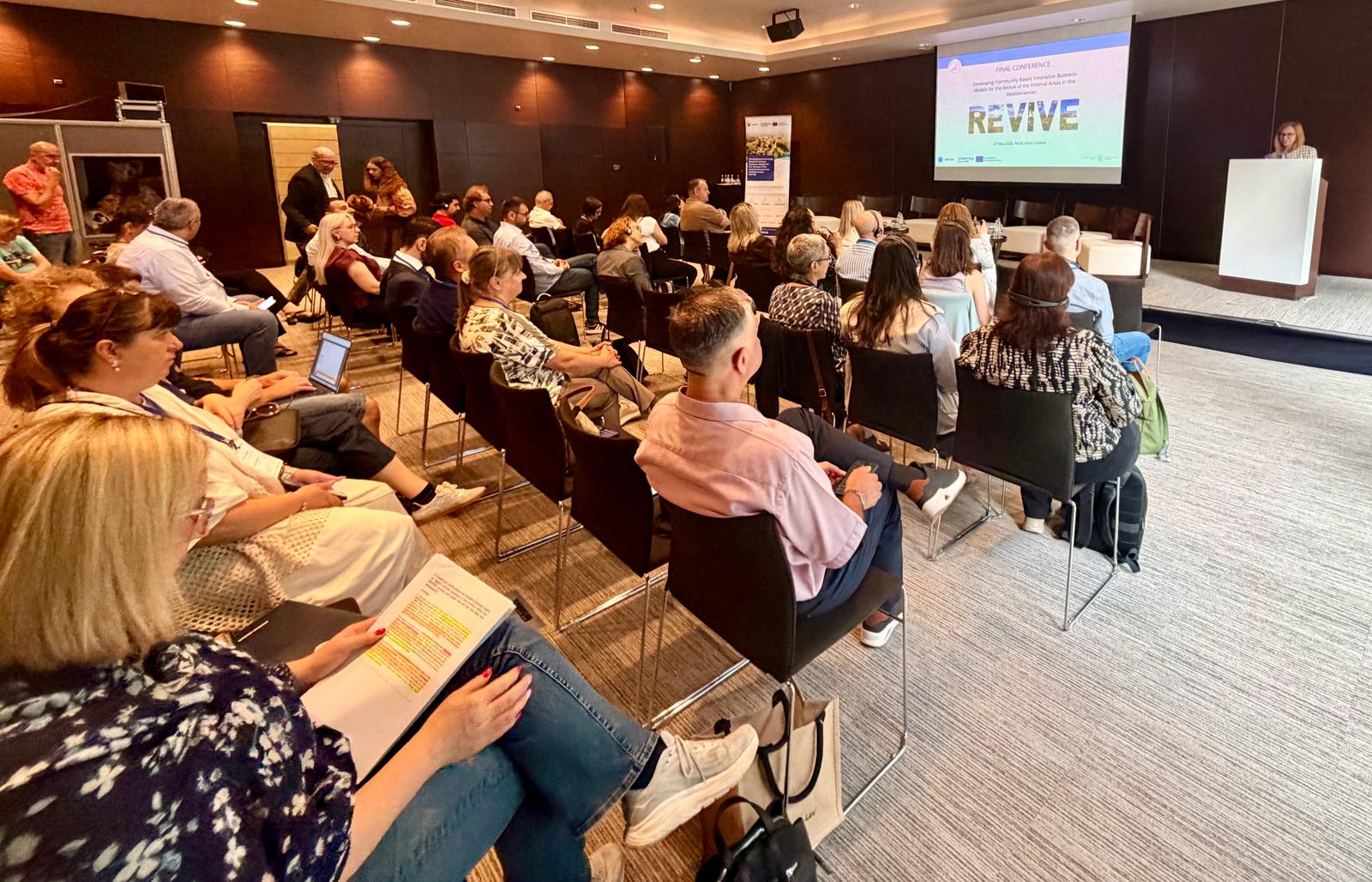
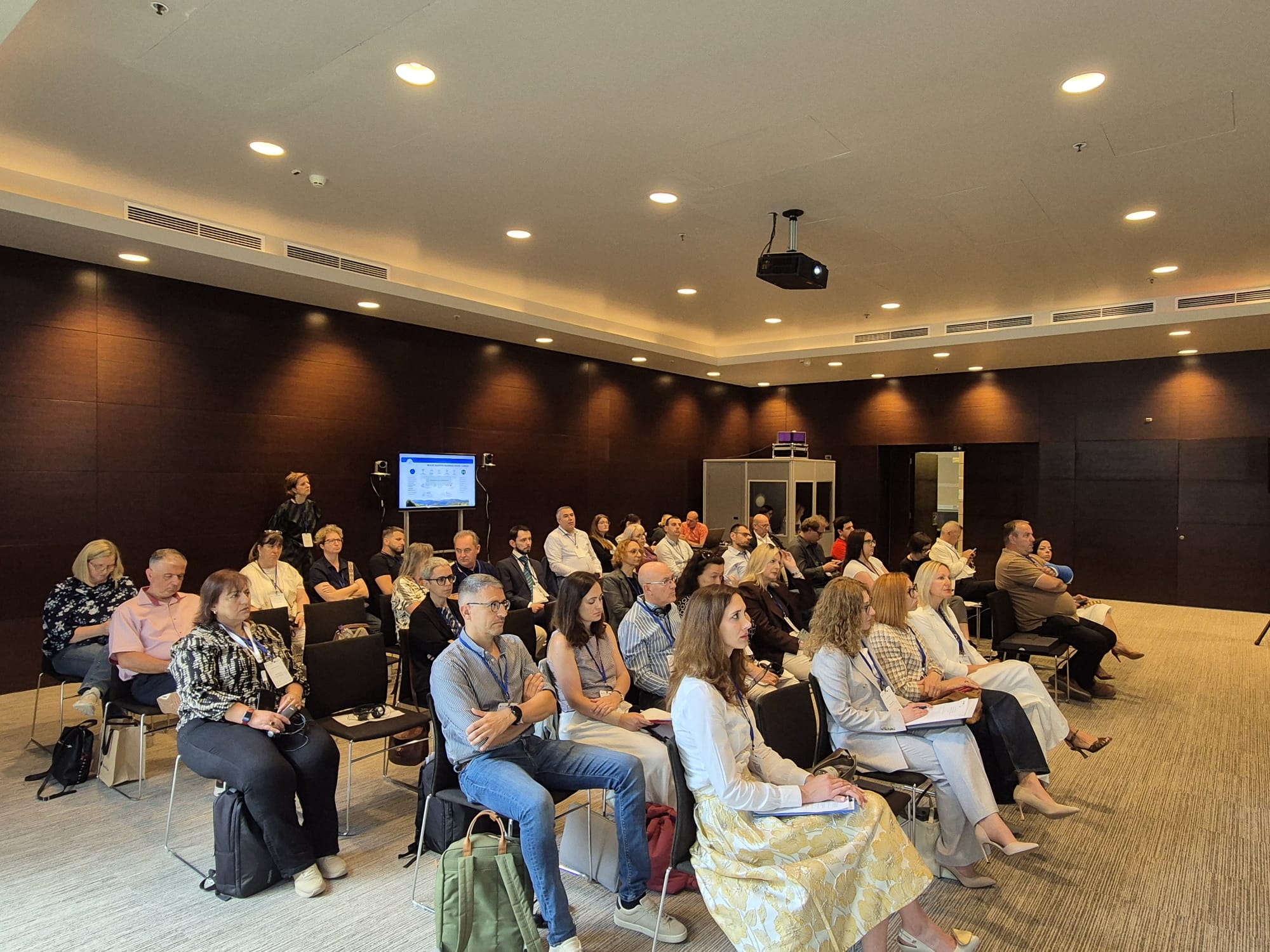
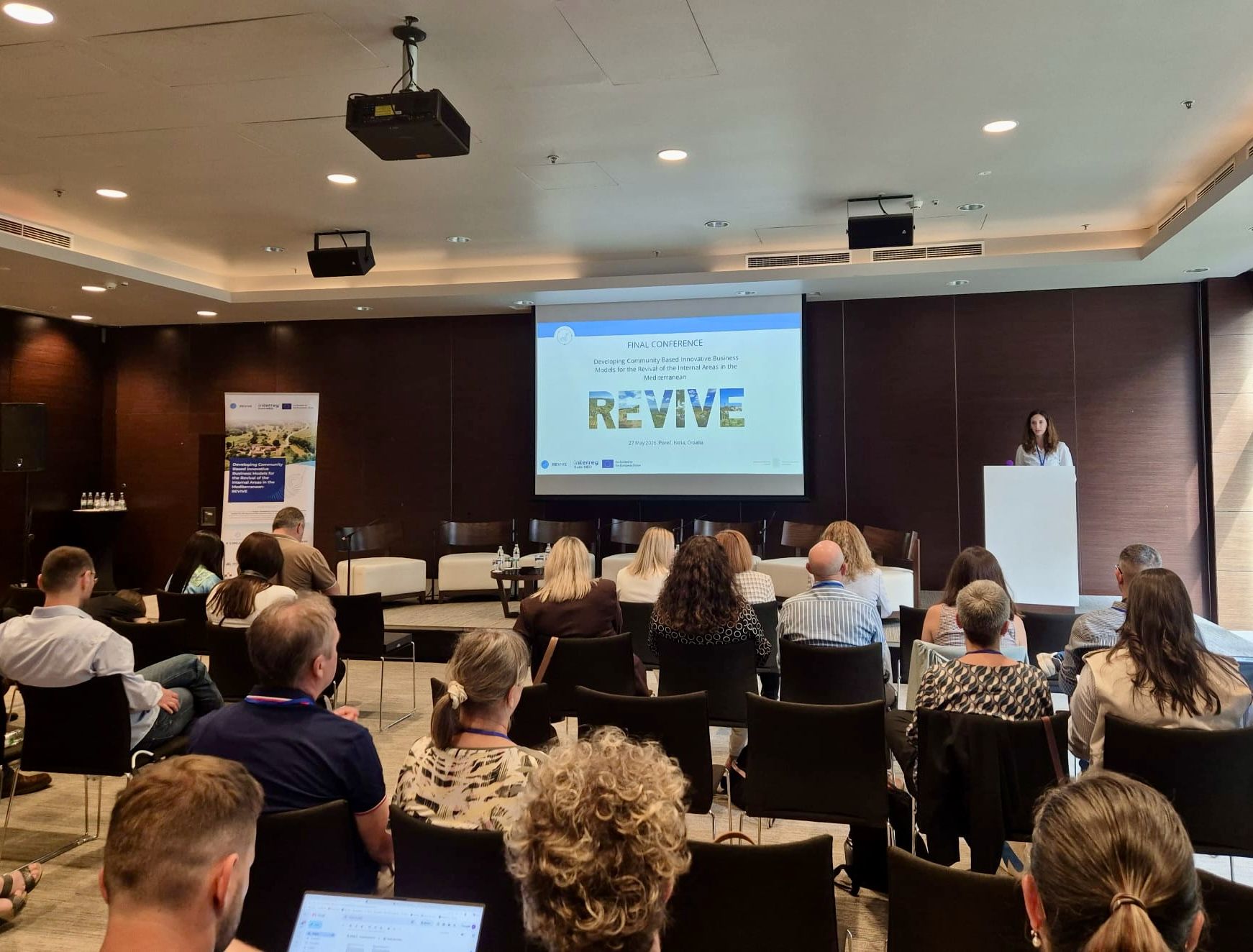
The Institute of Agriculture and Tourism (IPTPO), in cooperation with the other project partners, organised the final conference of the Interreg Euro-MED project “Developing Community Based Innovative Business Models for the Revival of the Internal Areas in the Mediterranean – REVIVE”, in Istria, Croatia on 27 and 28 May. The event brought together project partners and stakeholders from Spain, Italy, Slovenia, Croatia, North Macedonia, Greece and Cyprus.
The first day of the conference was held in Poreč and was dedicated to panel discussions, while the second day included a study visit and a field tour of good practice examples in Istria.
The programme was opened with welcome speeches by Jessica Acquavita, Vice-President of Istrian County; Dr Kristina Brščić, Assistant Director for Economy at the Institute of Agriculture and Tourism (Croatia) and local coordinator of the REVIVE project at the Institute; and Dr Eudokia Balamou, representative of the lead project partner, the Larnaca and Famagusta Districts Development Agency (Cyprus).
In order to present the very idea and goal of the REVIVE project to the gathered participants, Dr Valentina Marchi (National Research Council, Institute of Bioeconomy, Italy) presented the methodology that was created within the project and based on which innovative business models were developed in line with the needs of local communities in seven pilot areas.
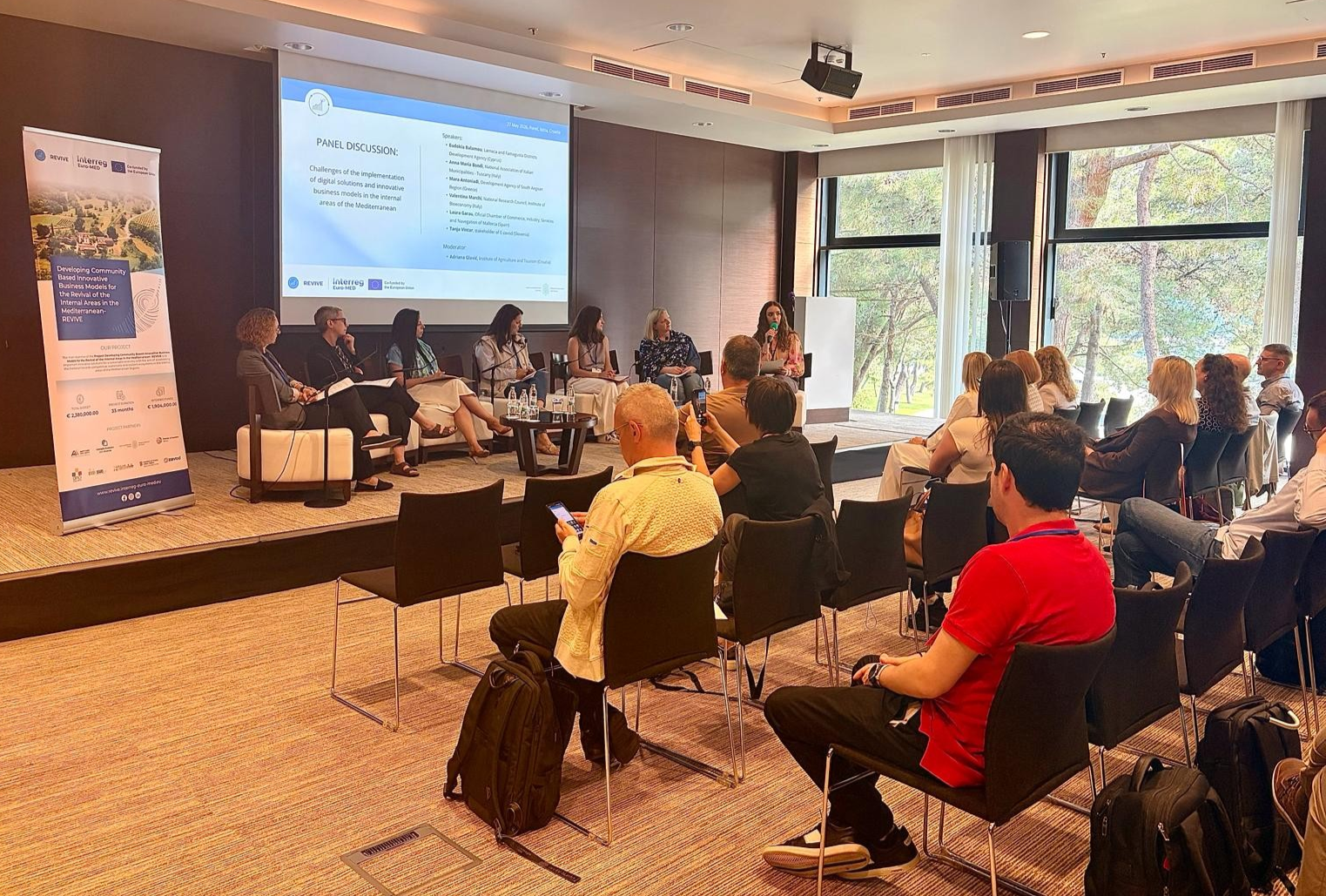
This was followed by the panel discussion “Challenges of the implementation of digital solutions and innovative business models in the internal areas of the Mediterranean”. The discussion featured representatives of the project partners Dr Eudokia Balamou (Larnaca and Famagusta Districts Development Agency, Cyprus), Anna Maria Bondi (National Association of Italian Municipalities – Tuscany, Italy), Mara Antoniadi (Development Agency of South Aegean Region, Greece), Dr Valentina Marchi (National Research Council, Institute of Bioeconomy, Italy), Laura Garau (Official Chamber of Commerce, Industry, Services and Navigation of Mallorca, Spain) and Tanja Vintar (stakeholder representative of E-zavod, Slovenia). The speakers shared their experiences of participating in the project and discussed activities implemented in the REVIVE pilot areas. They also highlighted key insights that emerged from their participation in the project, which may serve as guidelines for addressing challenges more successfully in other rural areas. The panel discussion was moderated by Adriana Glavić from the Institute of Agriculture and Tourism.
During the event, Isabelle Nobio, representative of the Joint Secretariat of the Interreg Euro-MED programme, also addressed the participants, further supporting and confirming the importance of the REVIVE project activities.
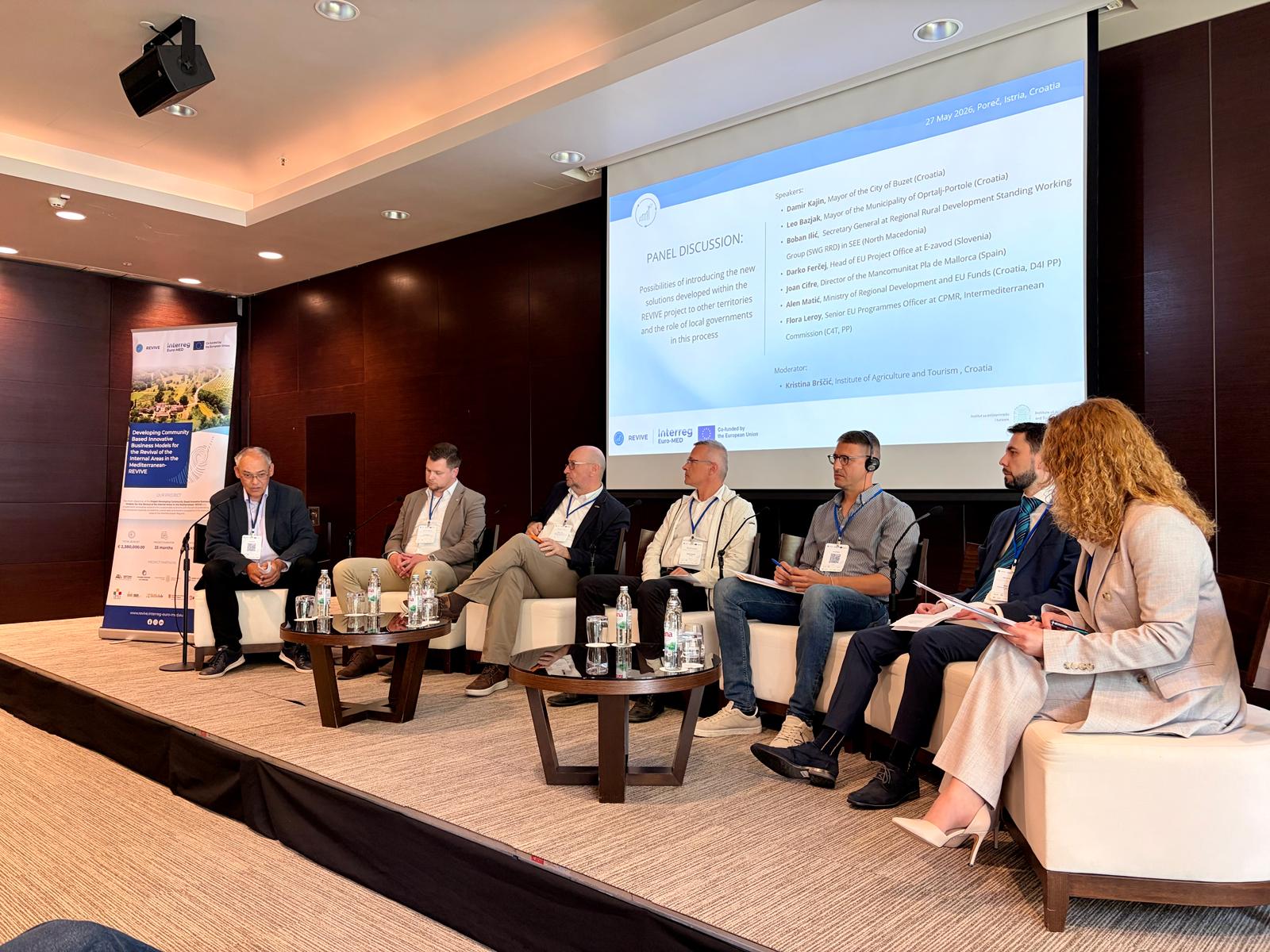
The second panel discussion, “Possibilities of introducing the new solutions developed within the REVIVE project to other territories and the role of local governments in this process”, brought together representatives of public bodies and institutions, who discussed the areas involved in the REVIVE project and the key challenges they face. As representatives of bodies and institutions that can support rural territories in project implementation, the panellists shared their experiences and views on the REVIVE project and reflected on the possibilities for transferring project results to different contexts.
The panel featured Damir Kajin, Mayor of the City of Buzet, which is an associated partner of the Institute in the REVIVE project (Croatia), Leo Bazjak, Mayor of the Municipality of Oprtalj-Portole – a REVIVE project pilot area (Croatia), Boban Ilić, Secretary General of the Regional Rural Development Standing Working Group (SWG) in SEE – a REVIVE project partner (North Macedonia), Darko Ferčej, Head of the EU Projects Office at E-zavod – a REVIVE project partner (Slovenia), Joan Cifre, Director of Mancomunitat Pla de Mallorca – a REVIVE project partner (Spain), Alen Matić from the Ministry of Regional Development and European Union Funds – partner in the Interreg Euro-MED Dialogue4Innovation project (Croatia), and Flora Leroy, Senior EU Programmes Officer at CPMR, Intermediterranean Commission and representative of the Interreg Euro-MED Community4Tourism project. The panel was moderated by Dr Kristina Brščić. The discussion highlighted the importance of involving local stakeholders in the creation of innovative business solutions aimed at territorial development. It was emphasised that building trust, educating local stakeholders and involving them from the very beginning are essential for successful project implementation.
The event was moderated by Teuta Benčić from the Institute of Agriculture and Tourism, and after the public event, the partners held an internal meeting where they discussed the possibilities of transferring the results to other areas in the Mediterranean in a potential continuation of the project. The partners in the REVIVE project have applied for a continuation of the project (transfer), and whether the continuation of the project will be approved will be known by the end of June 2026.
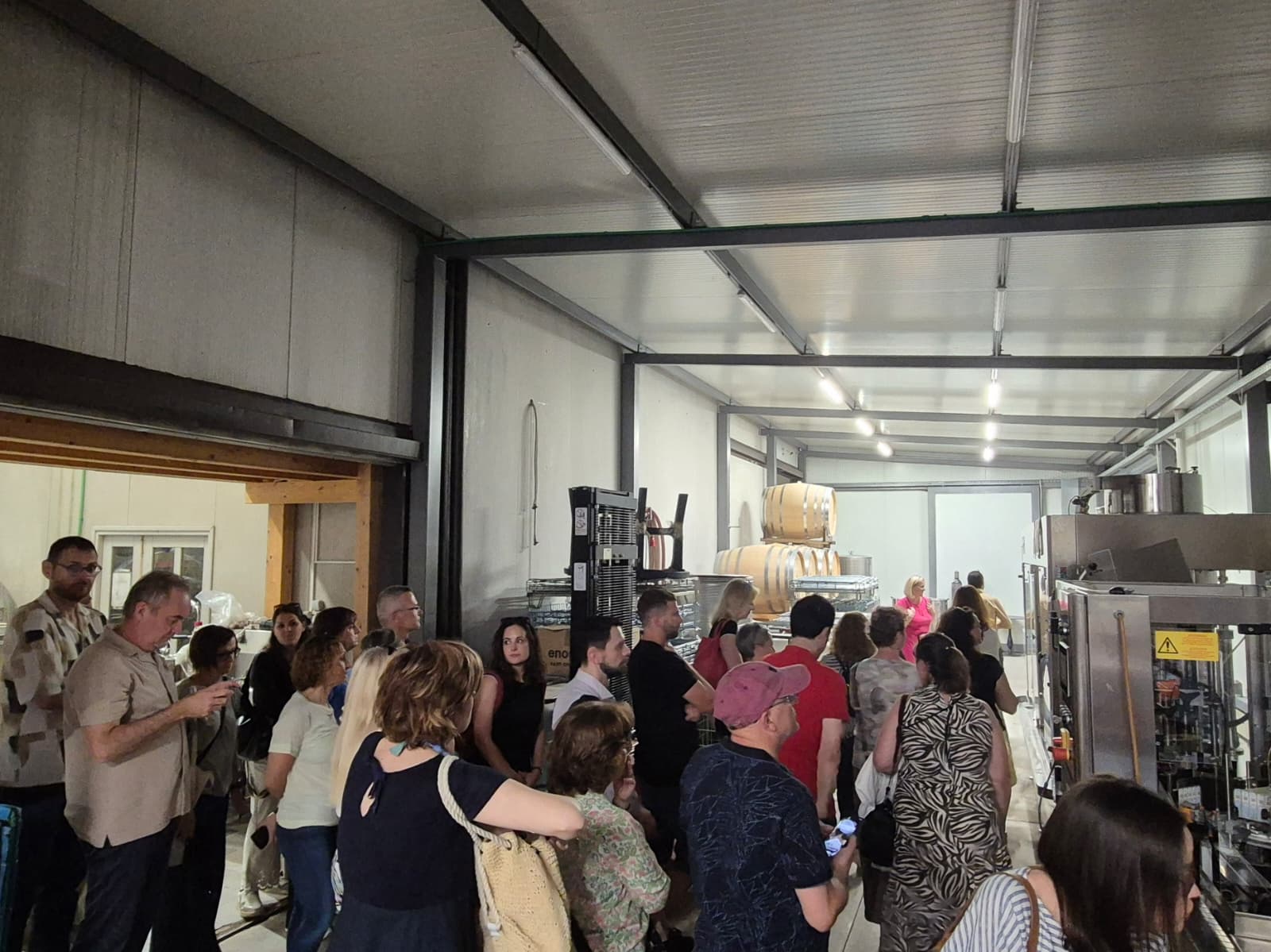
The first day of the programme concluded with a visit to the Rossi Winery as an example of good practice, where participants had the opportunity to tour the winery with expert guidance and taste local products.
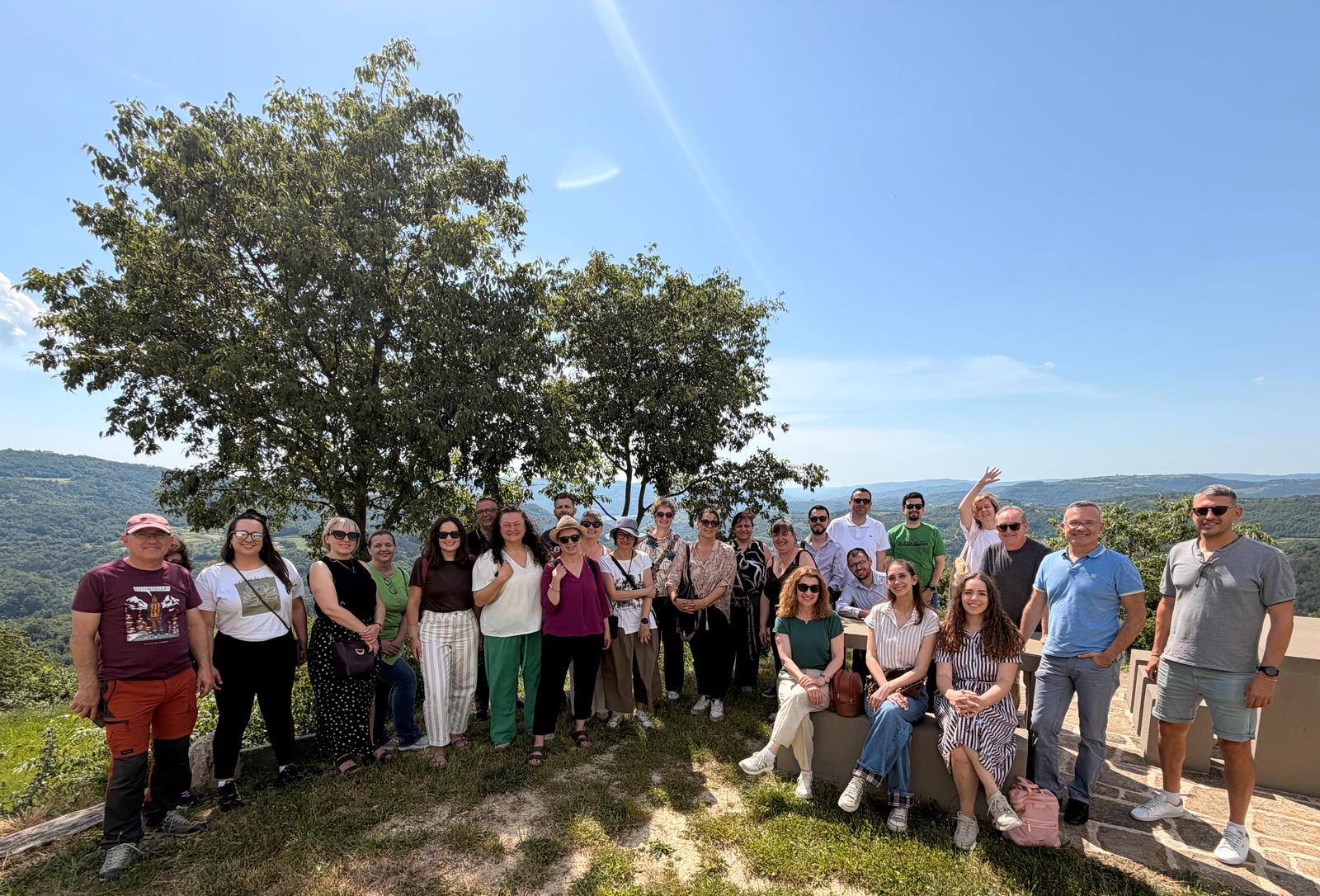
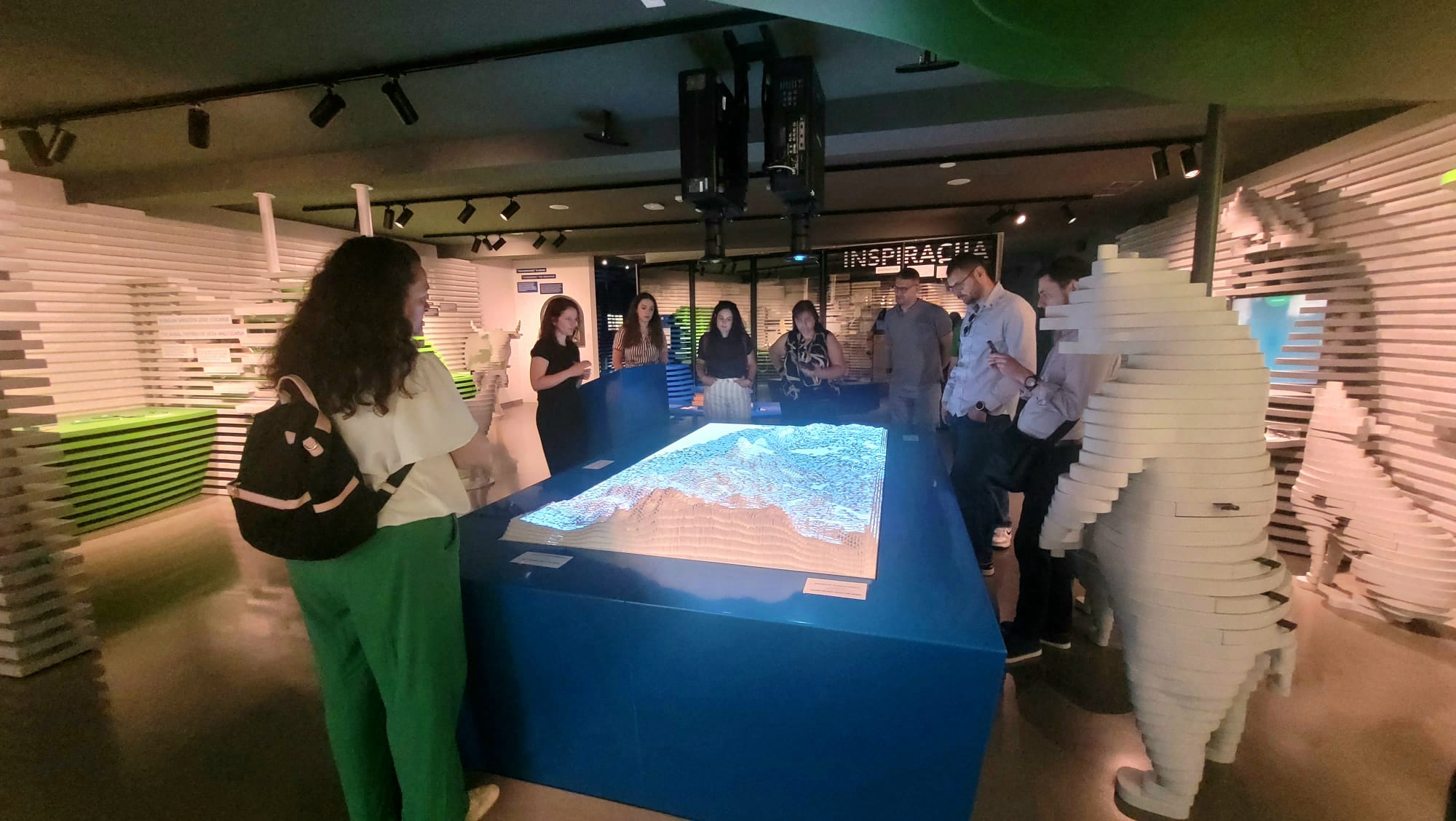
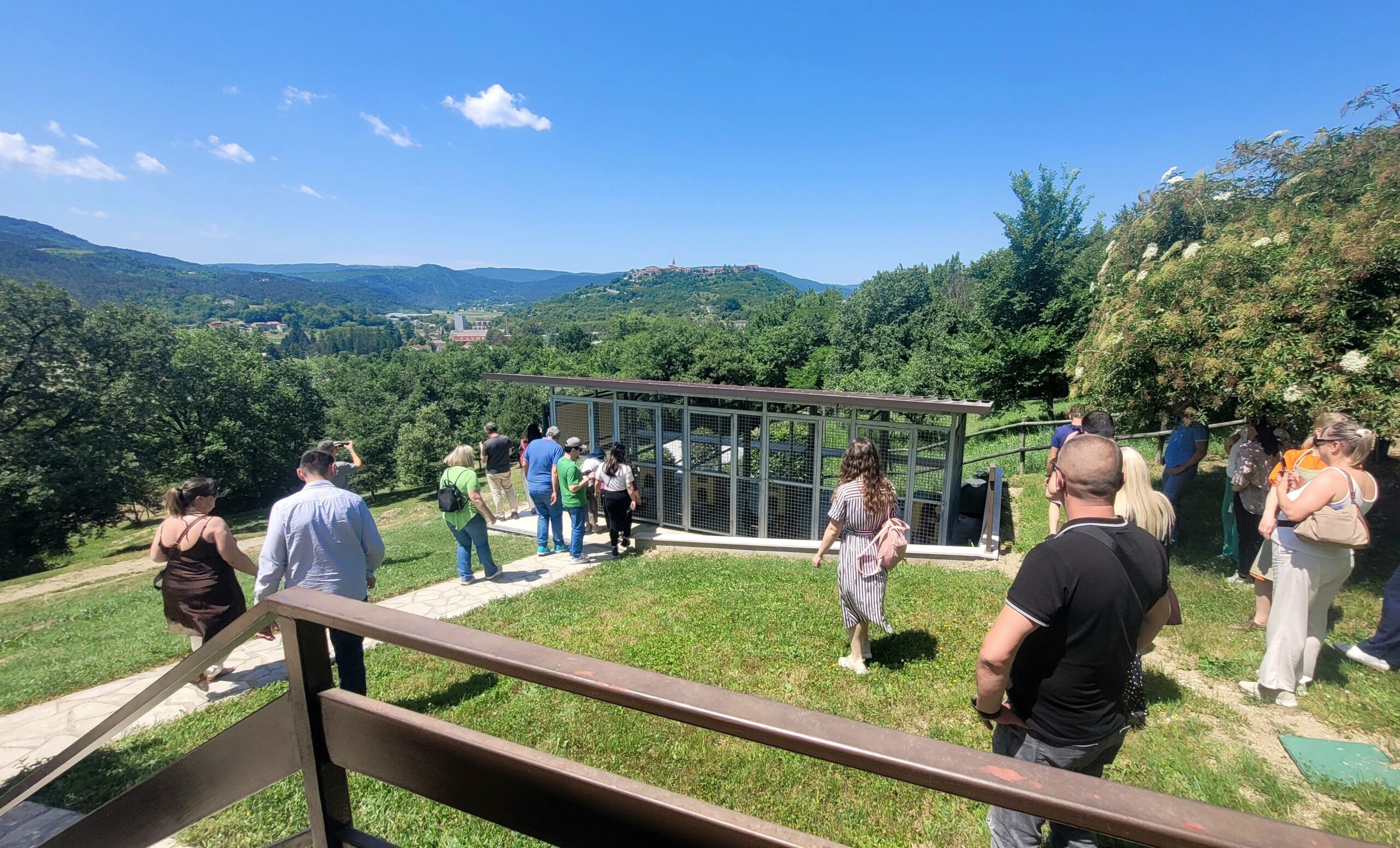
On the second day, a study visit was held dedicated to learning about the natural and cultural heritage of Istria and the REVIVE project pilot area. On the second day, a study visit was held dedicated to learning about the natural and cultural heritage of Istria and the REVIVE project pilot area. The project partners started the day at the Poklon Visitor Center in Učka Nature Park, where they explored, through a modern and interactive visitor centre, the unique features of Učka and the ways in which natural heritage connects with culture, sustainable development, and digital technologies.
This was followed by a visit to the Prodan Tartufi family farm near Buzet. During the visit, participants learned about the tradition of truffle hunting in Istria, the process of finding and processing truffles, and the development of products based on this ingredient. The visit concluded with lunch, during which they tasted various dishes enriched with truffles.
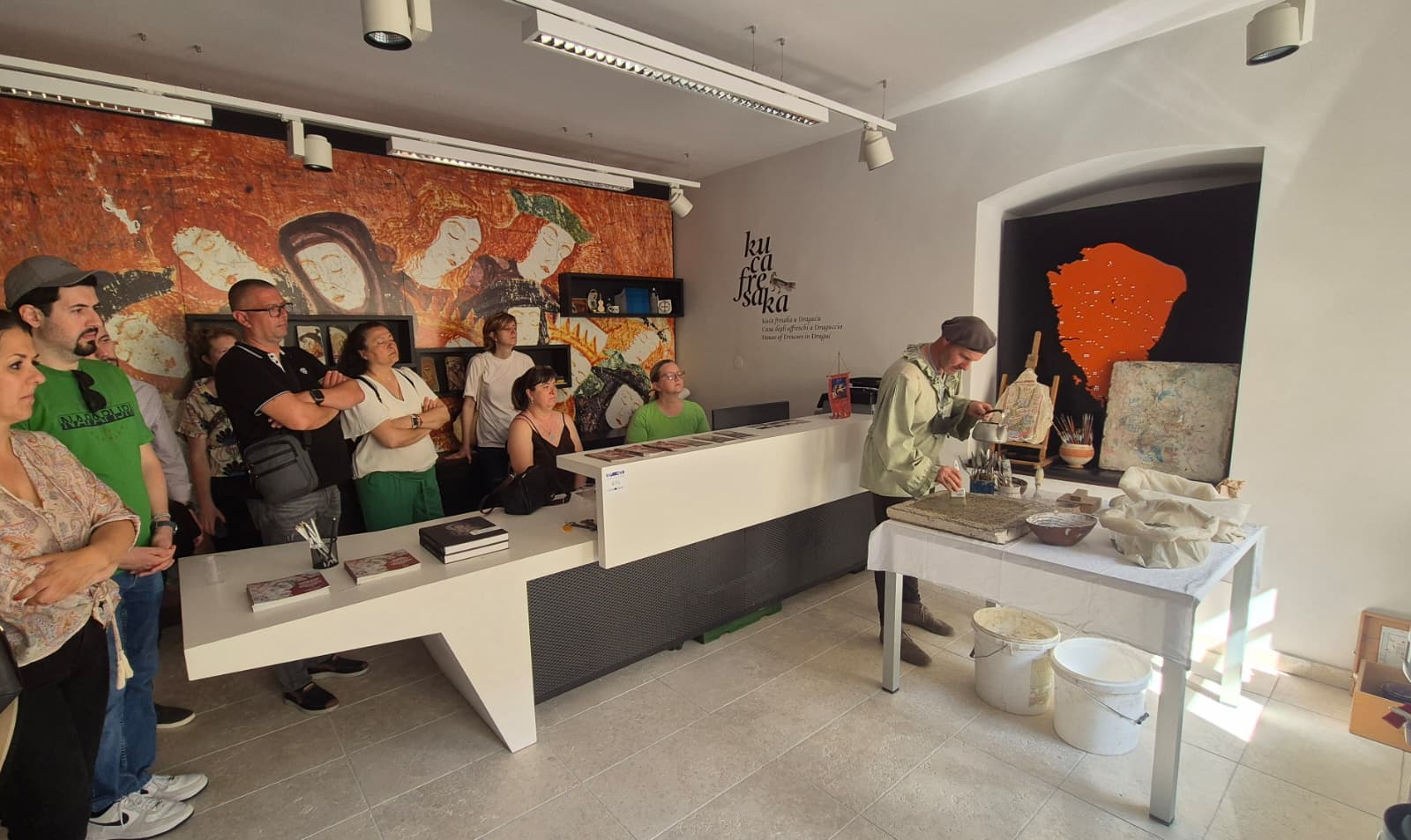
In the afternoon, participants visited Draguć, a small town near Cerovlje, where they toured two churches with preserved frescoes. The visit continued at the House of Frescoes, an interpretation museum dedicated to mural painting heritage in Istria. Through the museum exhibition and a guided presentation, participants learned about the rich tradition of Istrian frescoes and then took part in a fresco-making workshop.
The REVIVE final conference was not merely a formal conclusion of the project, but also a demonstration of what the internal areas of the Mediterranean can offer when their resources are viewed holistically. Over the course of two days in Istria, project partners, representatives of local authorities, experts, development agencies and stakeholders came together around the same question: How can heritage, knowledge, nature, products and local initiative be transformed into a sustainable future? The answer offered by REVIVE is neither simple nor quick, but it is clear. The development of rural and internal areas must be built on cooperation, community involvement, innovation and respect for local identity. Through the hosting and organisation of the conference by the Institute of Agriculture and Tourism, Istria served as one example of such an approach, a place where vineyards, truffles, mountains, frescoes, and small towns are not viewed merely as attractions, but as the foundations of a new development story for the Mediterranean.
The two-day event was organised by the REVIVE project team from the Institute of Agriculture and Tourism: Teuta Benčić, Adriana Glavić and Dr Kristina Brščić.